
Stress, Balance and Where the Energy Gets Stuck

Why is balance important?
Your body is always working to keep things in balance. It makes sure the right response happens at the right moment, that the resources needed are there when they are needed, and that once the demand has passed you recover and settle back to ease. Temperature, blood sugar, fluid, mineral levels, all of it is held steady this way, constantly and without you ever being aware of it. This is how the body survives well, and it has a name: homeostasis.
What causes imbalances?
There are many things that cause imbalances, and often we call great many of them stress.
When we talk about stress in the context of health, we mean something much broader than the everyday sense of feeling pressured or overwhelmed, although that is absolutely part of it. From a holistic perspective, stress is anything that places an increased demand on your body's resources: anything that asks your cells, your organs, your nervous system, your immune system, or your whole self to work harder than they would in a state of ease.
This includes the obvious things: emotional pressure, anxiety, difficult life events, grief, trauma, suppressed emotion, sustained responsibility, conflict that continues, too much work, and the relentless background hum of a nervous system that never quite switches off.
But it includes a great deal more besides. A period of illness or infection, even one that felt mild or that happened years ago, places a significant demand on mineral reserves as the body mobilises its defences and works to repair itself. A nutrient deficiency is itself a form of stress, because the body is being asked to run its thousands of daily processes without the raw materials it needs to do so properly. The same can be said of a nutrient excess, where the body is under strain to process the intake. Environmental toxins, the heavy metals, chemicals and pollutants we are all exposed to simply by living in the modern world, create a quiet but ongoing burden that the liver, kidneys and immune system must continually manage. Structural stress, such as pain, injury or poor sleep, depletes the same reserves as emotional stress.
Even things we might think of as positive, a growth spurt, puberty, a period of intense activity or excitement, make significant demands on the body's mineral supply.
How does the body react to stress?
Any demand creates stress, and when the body is in balance it meets that demand and resolves it quickly. This is homeostasis doing exactly what it exists to do. It is not stillness, it is movement. The body needs to respond to stimulation, and that responding is part of being alive rather than evidence that something has gone wrong.
The body also does not distinguish between emotional and physical stress. Grief and infection arrive at the same door and are answered in the same way, out of the same reserves.
An imbalance appears when the demand is greater than the capacity available to meet it. This is worth saying plainly, because it is the reason the same event flattens one person and leaves another largely untouched. It is not the size of the event that decides. It is what that person had available, their susceptibility at the time.
Why the response wants to finish
Think of a plant. It needs to be able to sway in the wind, turn towards the light, and recover after it has been knocked or trodden on. Those responses are not damage, they are how it stays alive. A plant that could not move with the wind would snap in the first storm, and one that could not turn would grow away from the light and weaken. The health is in the responding, not in the stillness.
And if something holds it, a stake tied too tightly, a stone resting against the stem, the plant does not stop growing. It grows around the obstruction. It carries on, and it carries the shape of the thing that stopped it.
The same principle runs through the body. Think about what happens when you meet an infection. The body raises its temperature, and that fever is not the illness, it is the response to it. It is purposeful, and given what it needs, it finishes: the temperature rises, does its work, and comes back down. That completing is what we are looking for.
Where it cannot complete, the picture changes. If the body does not have the reserves to mount the response fully, it can be left half made. The illness that clears but leaves a long tail behind it. The person who tells you they were never quite well again after that winter, years ago, and has never connected the two.
Because every one of those responses is fuelled. Mounting a fever, repairing the tissue afterwards, and coming back down again all draw on the same reserves. A body with very little left cannot always complete what it starts.
The response was never the problem. A response that could not finish is. That is the stuck, and where it stopped is where we look.
What happens when the demand does not stop?
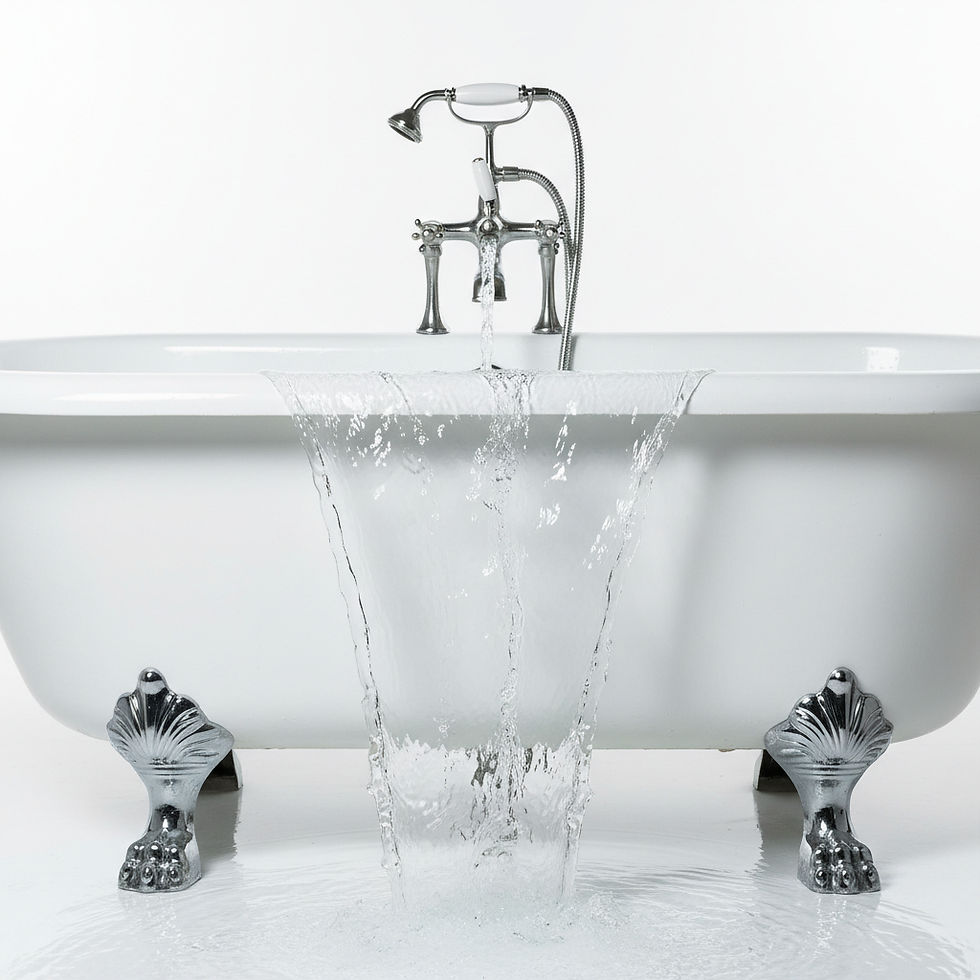
The body cannot hold a high response indefinitely, because it costs too much to run, the body will run out of reserves. So when the demand continues, it does the most sensible thing available to it. It compensates. It finds a way of carrying on that is cheaper to maintain.
And the compensation works. That is precisely the problem. Because it works, it stays. In time it stops being a temporary measure and becomes the normal setting, and the person adjusts around it until they no longer remember being any other way.
This is what we mean when we talk about the energy getting stuck. A response was started and never completed. Something was mobilised, something was held, something was shut down in order to cope, and then the pressure eased and the body could not undo it.
An acute response is meant to be brief. It rises, does its work, and ends, and the ending is as much a part of it as the rising. What we call chronic illness is very often that same acute mechanism, still running, long after the thing it was answering has gone. Nothing new has been introduced. The body is doing what it always did, only it is now doing it continuously and at a lower key, and because it has gone on long enough it acquires a name and becomes a condition. So chronic illness is frequently not a different event from the acute one. It is the acute one that never closed and the pathology deepened.
THE LINE TO HOLD ON TO:
Stuck is not the same as broken. What the body did was intelligent, and at the time it was the right thing to do. We just need to support the body to rebalance.
Where does a Hair Tissue Mineral Analysis come in?
This is where a Hair Tissue Mineral Analysis becomes so valuable, and how it actually works is a subject for the following blog: https://www.aspirehomeopathy.com/post/how-an-htma-works-alongside-homeopathic-principles-to-reveal-where-the-energy-got-stuck-and-the-gove
For now it is enough to say this. Every one of those stresses is paid for in minerals, and hair tissue keeps a record of that spending.
WHY HAIR TISSUE AND NOT BLOOD?
Blood is regulated minute by minute, the body will work hard to ensure the blood has everything it needs to circulate to the organs and body to keep you alive, so blood shows what the body is managing today. The tissue shows what it has been paying in order to manage it. The hair keeps a record of what was available to it during growth.
It does not tell us which stressor caused which pattern, this is we can see in our case work. But it does show us how this particular body has been responding, where the reserves have been spent, and, most usefully of all, where the energy stopped moving and which minerals are holding the response pattern.
How do we treat this?

As homeopaths we treat these imbalances with carefully selected remedies, matched to the individual: their mineral picture, their constitution, and the way their own stress pattern has unfolded.
That means understanding the timeline. What the person has lived through, in what order, and how they responded to it each time.
Homeopathic remedies, even in highly diluted form, work with the body's own adaptive mechanisms rather than overriding them. They stimulate its natural capacity for self regulation, encouraging more efficient use of the minerals available and a return towards metabolic balance.
We are not simply adding the thing that is missing. We are meeting the response that the body is stuck in.
Hair tissue mineral analysis is a screening and pattern tool rather than a diagnostic test, and nothing here replaces individual medical advice.
© 2026 Aspire Homeopathy. All rights reserved. · info@aspirehomeopathy.com


